
Equine Performance
The Equine Athlete
The horse is the most aerobically gifted athlete on earth. Understanding that physiology — and measuring it properly — is how performance is built and soundness protected.
0
VO₂ max, ml/kg/min
0
Maximal heart rate, bpm
0
Gallop speed, km/h
0.0
Strides per second
Assessment Protocol
Phase 01
Aerobic Power
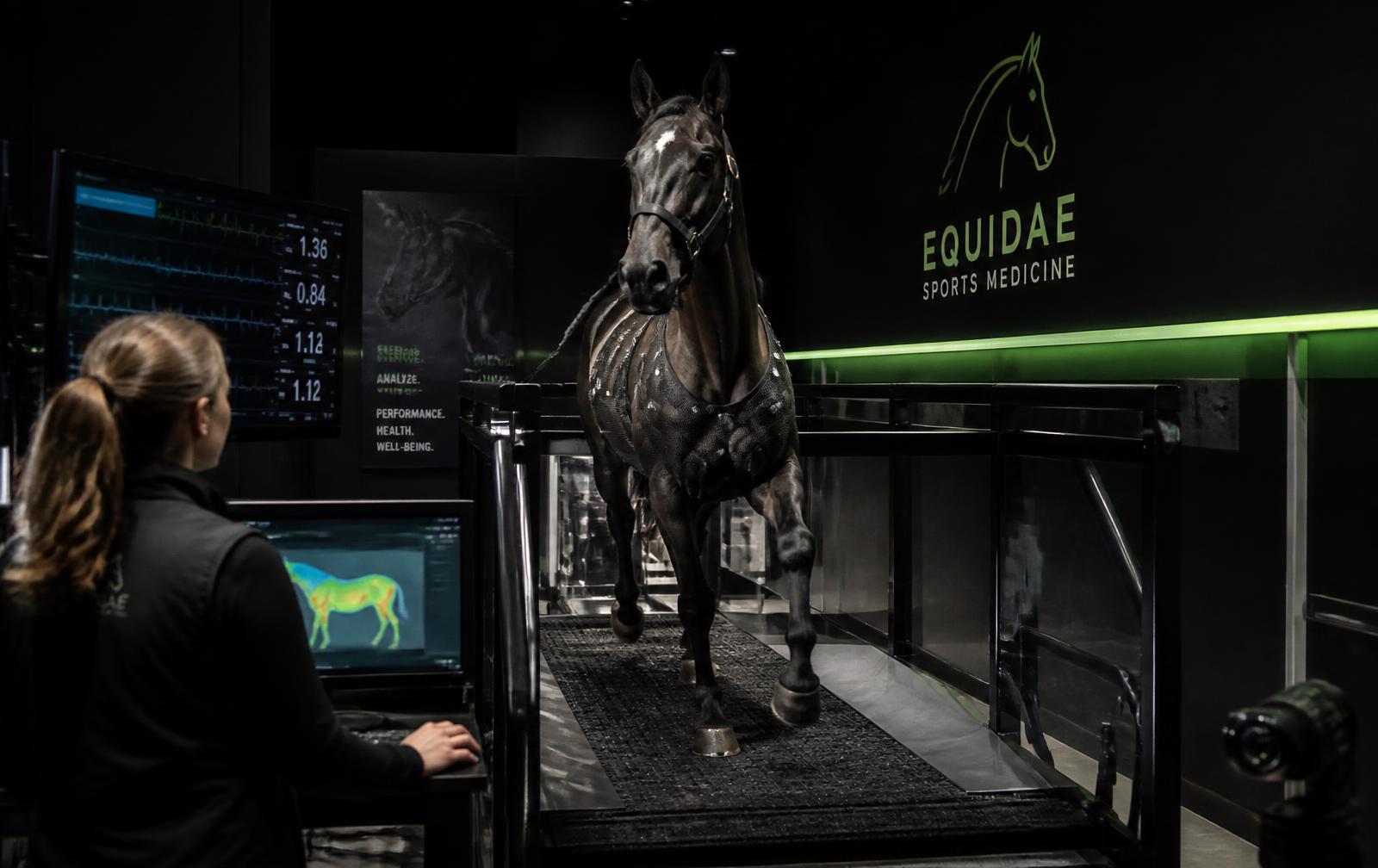
High-speed treadmill or field-based incremental tests with gas analysis quantify oxygen uptake — a capacity roughly double that of an elite human endurance athlete per kilogram.
Phase 02
Lactate & V200
Speed at a blood lactate of 4 mmol/L and the velocity at 200 bpm heart rate give repeatable fitness markers that track conditioning across a season.
Phase 03
Respiratory Function
The horse's stride is mechanically coupled to breathing at gallop. Dynamic endoscopy and airway assessment identify upper-airway limits invisible at rest.
Phase 04
Recovery & Welfare
Heart-rate recovery, thermoregulation, hydration and workload monitoring keep training progressive while protecting soundness and welfare.
Equine Data
Measuring the horse
Heart Rate vs Speed
0 bpm
Blood Lactate
0.0 mmol/L
Weekly Gait Distribution
0%
Gait Symmetry